



The 2026 Honda Prelude: A Premium Pricetag Testing Our Loyalty (And Wallets)
The automotive world, ever-evolving, occasionally grants us a gift – the resurrection of a beloved nameplate. Few revivals have sparked as much conversation, anticipation, and ultimately, apprehension, as the 2026 Honda Prelude. For enthusiasts who remember the golden era of Honda performance, the return of the Prelude signifies hope: a sleek, driver-focused coupe re-entering a market increasingly dominated by high-riding SUVs. From early whispers to tantalizing prototype drives, the buzz has been palpable. Yet, as a veteran in this industry with over a decade immersed in market trends and enthusiast forums, the recently unveiled starting price of over $43,000 for the 2026 Honda Prelude has forced me, and many like me, to pump the brakes on our collective excitement.
In 2025, the landscape for performance vehicles and hybrid technology is more competitive than ever. Consumers demand not just style, but substantive value, engaging driving dynamics, and a clear understanding of where a vehicle fits in their lifestyle. The Prelude, positioned as a sophisticated hybrid performance coupe, faces an uphill battle to justify its premium sticker price against a diverse array of established rivals and more practical alternatives. This isn’t just about a number; it’s about the perceived value, the driving experience, and the strategic positioning in a highly segmented market.
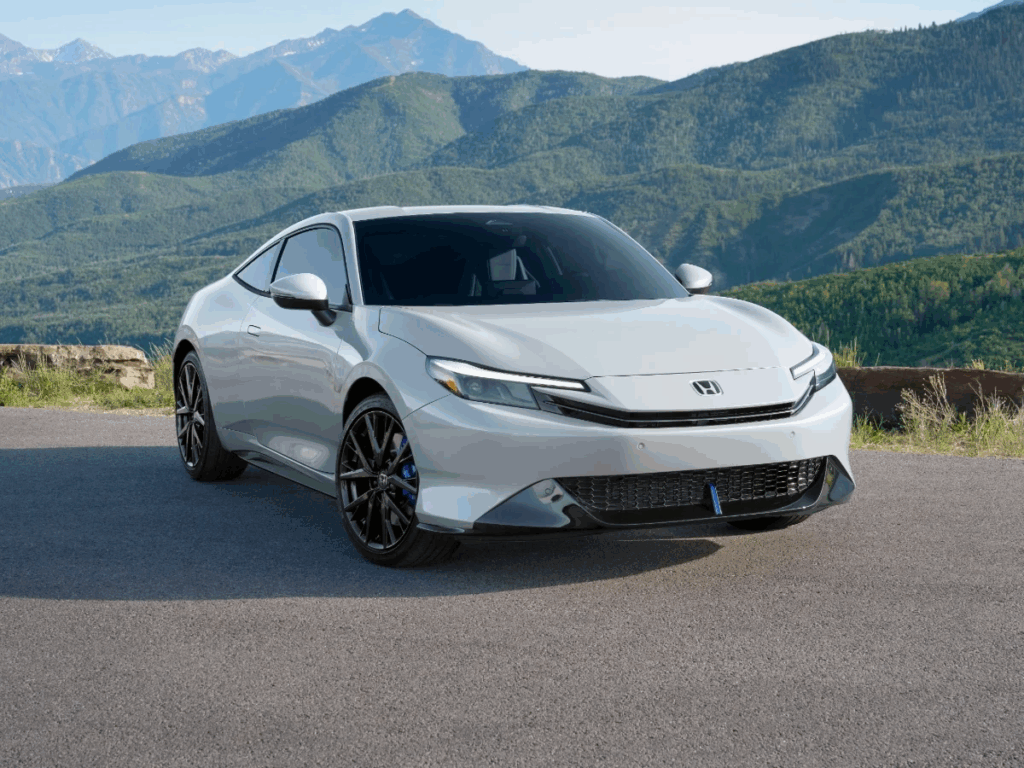
The Weight of Expectation: Reclaiming a Legacy
The Honda Prelude name carries significant weight. For decades, it represented Honda’s commitment to accessible, front-wheel-drive (FWD) sports coupes that blended style, practicality, and an undeniably fun-to-drive character. It was a testament to Honda’s engineering prowess, often showcasing advanced features for its time, like four-wheel steering. The very idea of its return ignited a firestorm of nostalgia, promising a modern interpretation of that classic formula. A dedicated coupe body style, especially in this era, is a welcome sight – a defiant nod to the shrinking segment of two-door sports cars.
Early reports from brief prototype drives only fueled this enthusiasm. Journalists, myself included, noted a chassis that felt remarkably dialed in, embodying that characteristic Honda precision and agility. The S+ Shift system, while a digital simulation rather than a true mechanical shift, offered an engaging experience, at least on a track. The hybrid powertrain promised a blend of performance and efficiency, a contemporary twist for a classic name. This seemed like a recipe for success: a stylish, modern sports car that acknowledged its past while embracing the future of electrification. The vision of a truly compelling, driver-focused hybrid performance coupe began to solidify.
However, as an expert closely observing automotive innovation and product development strategies, a crucial detail emerged that raised the first red flag: the powertrain, while innovative, is fundamentally derived from the excellent but significantly more affordable Civic Hybrid. This isn’t inherently a negative; platform sharing is smart engineering. But when the price point reaches into territory occupied by dedicated performance machines and entry-level luxury coupes, the “Civic Hybrid with a new body” perception becomes a significant hurdle for its value proposition.
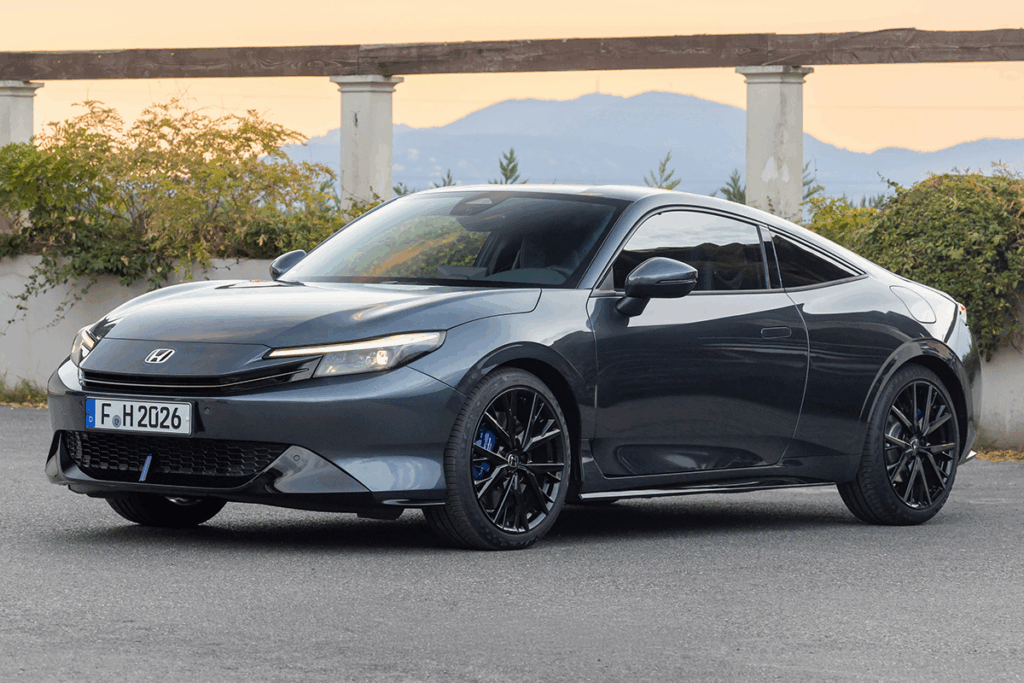
The $43,000 Crossroads: Deconstructing the Premium Pricetag
Let’s talk numbers. A starting price north of $43,000 in 2025 places the 2026 Honda Prelude in a fiercely contested segment. What does that money typically buy a discerning enthusiast today? It should deliver a truly compelling, distinct, and uncompromising driving experience, or a level of luxury and sophistication that justifies the investment. For many, this price point for a FWD hybrid coupe, even a well-engineered one, simply doesn’t compute when evaluating the competitive landscape.
The absence of a manual transmission is another point of contention that cannot be overstated for its target demographic. While automatic transmissions are increasingly efficient and often faster, the visceral, engaging experience of rowing your own gears remains a cornerstone for many traditional sports car buyers. Honda, a company revered for its manual gearboxes, opting for an automatic-only offering in a car named Prelude feels like a missed opportunity to truly connect with the enthusiast core. It speaks to a broader market strategy, perhaps, but one that alienates a significant portion of potential buyers looking for pure driver engagement. This isn’t just about a transmission; it’s about a philosophical approach to performance.
When you invest over $40,000 in a vehicle, expectations are high. You’re not just buying transportation; you’re buying a statement, an experience, and a certain level of performance or luxury. The Prelude’s hybrid setup is undeniably unique in the coupe segment, offering a compelling blend of power and fuel efficiency. But its uniqueness may, paradoxically, be its biggest challenge. It forces potential buyers into a difficult decision tree: are you looking for performance, or are you looking for a hybrid? The Prelude attempts to be both, but at its price point, it might not be the best choice for either group.
The Contenders: Where the Prelude Stacks Up (and Doesn’t)
To truly understand the Prelude’s precarious position, we must examine its competition in the current automotive market.
Direct RWD Sports Car Competitors:
Ford Mustang EcoBoost Premium: Starting around $39,000, the Mustang EcoBoost Premium offers genuine rear-wheel-drive (RWD) architecture, a powerful turbocharged engine, iconic American styling, and a vast aftermarket for customization. For performance buyers, the RWD platform often translates to a more dynamic and engaging driving experience, particularly for those who enjoy pushing the limits or occasional track days. The Mustang’s connection to pure performance and its inherent driving pleasure make it a formidable rival.
Subaru BRZ tS: Priced just under $40,000 (around $39,500), the BRZ tS is a masterclass in affordable, pure driving engagement. It boasts a lightweight RWD chassis, a naturally aspirated boxer engine, and crucially, a standard six-speed manual transmission. It’s not about raw power; it’s about balance, feedback, and the unadulterated joy of driving. For enthusiasts prioritizing driver involvement and a traditional sports car feel, the BRZ tS offers an incredibly compelling package at a lower price point. Its focus on driving dynamics is uncompromising.
BMW 230i Coupe: Surprisingly, even an entry-level luxury sports car like the BMW 230i Coupe can undercut the Prelude, starting around $42,900. With its sophisticated RWD platform, a potent turbocharged four-cylinder engine, premium interior quality, and the prestige of the BMW badge, it offers a distinctly different, more upscale driving experience. For those considering an entry-level luxury sports car with European engineering and strong performance credentials, the 230i presents an attractive alternative that delivers on brand image and driving pleasure.
The critical distinction here is RWD versus FWD. While Honda’s FWD platforms are exceptional, the fundamental dynamics of a RWD vehicle are often preferred by performance enthusiasts seeking a more balanced weight distribution, better cornering behavior, and the ability to modulate power delivery more effectively. For $43,000, many buyers expect that RWD characteristic in a sports coupe.
Hybrid/Practical Alternatives:
On the other side of the spectrum, if fuel efficiency and hybrid technology are the primary drivers for a buyer, the Prelude faces equally strong, and often more practical or affordable, competition even within Honda’s own lineup and from rivals like Toyota.
Honda Civic Hybrid Sedan/Hatchback: The very platform on which the Prelude is built. A Civic Hybrid sedan starts just over $30,000, with the most premium Sport Touring hatchback version staying below $35,000. These vehicles offer excellent fuel economy, comfortable interiors, and a surprisingly engaging driving experience for their segment. For someone prioritizing efficiency, modern tech, and Honda reliability without needing a dedicated two-door coupe, the Civic Hybrid makes far more financial sense.
Toyota RAV4 Hybrid Limited AWD / Prius Limited AWD: When we look at comparable price points, a fully loaded Toyota RAV4 Hybrid Limited AWD sits around $42,600, offering superior utility, all-wheel drive capability, and renowned Toyota reliability in a popular SUV package. Even a top-tier Prius Limited AWD, packed with features, will leave a significant chunk of change in your pocket compared to the Prelude. These options cater to hybrid buyers seeking practicality, versatility, and proven efficiency, often with the added benefit of AWD for varied climates.
The Prelude’s positioning becomes incredibly challenging. It’s too expensive and perhaps too compromised for the pure performance buyer who can get RWD for less. It’s too focused on “sporty coupe” and too expensive for the hybrid buyer who can get better utility or comparable efficiency for less. It sits in a no-man’s-land, risking being admired for its concept but overlooked when it comes to actual purchasing decisions.
The Shadow of the CR-Z: Learning from Automotive History
As an expert analyzing automotive trends, I cannot help but draw parallels to the Honda CR-Z from a decade ago. The CR-Z was a compact hybrid coupe, forward-thinking, efficient, and genuinely fun in its own quirky way. It tried to blend hybrid economy with sports car aesthetics and handling. Yet, despite its merits, it never found its footing in the market. It was a car that answered a question virtually no one was asking. It was too sporty for hybrid buyers and too hybrid for sports car buyers. It occupied a niche that didn’t truly exist, leading to its eventual discontinuation.
The 2026 Honda Prelude, with its current pricing and positioning, risks walking a similar path. It’s a sharp, capable hybrid coupe that enthusiasts might admire for its boldness and engineering, but few may actually buy. The lack of a manual option, coupled with the FWD platform at a premium price, makes it a difficult sell for the purist. For the broader market, the appeal of a two-door coupe, especially one with a significant price tag, is increasingly limited. History is replete with examples of great cars whose market timing, pricing, or positioning simply missed the mark, consigning them to cult status rather than mainstream success.
What Could Have Been: A Missed Opportunity?
It’s easy to critique, but it’s also important to consider the immense potential. Had the 2026 Honda Prelude arrived with a starting price closer to the $35,000-$38,000 range, it would have been a game-changer. At that price point, its unique hybrid performance, coupled with Honda’s renowned engineering, would have made it an undeniable value proposition, attracting a broader base of buyers willing to embrace its FWD and automatic-only nature.
Alternatively, had Honda gone all-in on performance – perhaps with a more powerful, distinct hybrid powertrain, or even a low-volume RWD variant, or most critically, a manual transmission option – the $43,000+ price tag might have been more palatable. Imagine a “Prelude Type R” hybrid, truly pushing the boundaries of FWD performance or even introducing a new AWD hybrid system that justified its premium. The opportunity to truly reclaim its legacy as an accessible, driver-focused FWD sports coupe that innovated while respecting tradition feels, at this price, partially squandered.
The Verdict: A Hopeful Return, A Disappointing Price
The 2026 Honda Prelude represents a bold move by Honda to inject excitement into the coupe segment and showcase its hybrid technology in a sporty package. On paper, it holds immense promise: a revival of a cherished name, a sleek design, and a commitment to driving engagement. However, in the competitive and rapidly evolving 2025 automotive market, its announced starting price of over $43,000 casts a long shadow over its potential success. It challenges the brand loyalty of long-time Honda enthusiasts and asks difficult questions about its perceived value against more affordable, often more dynamic, and equally compelling alternatives.
While we celebrate the return of the Prelude and applaud Honda’s ambition, we’re left with a sense of disappointment that a vehicle with so much inherent promise might struggle to find its true audience due to its ambitious pricing strategy. It’s a car that might be admired from afar, but its place in many enthusiasts’ driveways, unfortunately, remains uncertain.
What are your thoughts on the 2026 Honda Prelude’s pricing and market positioning in today’s automotive landscape? Do you believe it offers compelling value, or is Honda misjudging the segment? Share your insights and join the conversation below, or explore our detailed reviews and competitive comparisons to find the perfect performance vehicle for your budget and driving style.