



The 2026 Nissan Rogue PHEV: A Decade of Insight into Nissan’s Electrified Crossover Evolution
From my vantage point, having navigated the evolving automotive landscape for over a decade, few segments have undergone such a dramatic transformation as the compact SUV. It’s the bedrock of family transport, the daily commuter, and increasingly, a showcase for cutting-edge technology. Nissan, a stalwart in this arena, is poised to redefine its flagship offering with the upcoming 2026 Nissan Rogue Plug-in Hybrid (PHEV), a vehicle that not only embraces electrification but does so with an eye toward an EV-like driving experience. This isn’t just another hybrid; it’s a strategic move, leveraging Nissan’s global electrification expertise to deliver something genuinely new to the American market in 2025.
For years, the Nissan Rogue has consistently delivered on its promise: a practical, feature-rich compact SUV priced competitively, typically well under the $50,000 mark. But as we look ahead to the 2026 model year, rolling out in late 2025, Nissan is introducing a game-changer: the brand’s very first plug-in hybrid option for the U.S. This isn’t merely about adding an electric motor; it’s about fundamentally altering the Rogue’s character, pushing it closer to its all-electric siblings, the Leaf and Ariya, especially through innovative features like one-pedal driving.
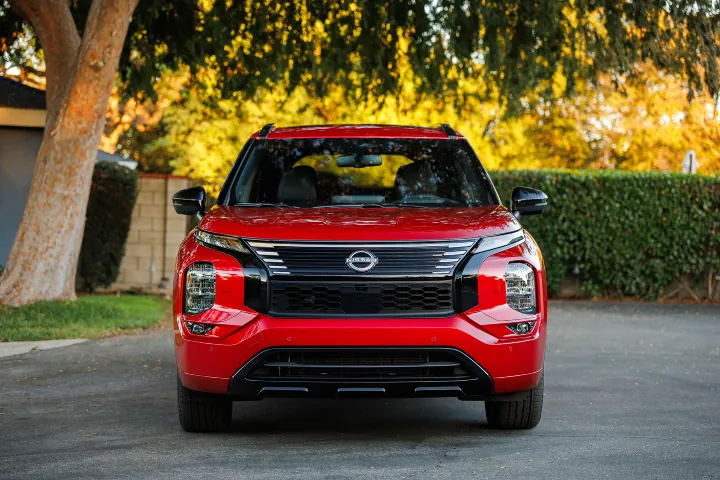
The Electrified Heart: A Deep Dive into the Rogue PHEV’s Powertrain
The journey to an electrified Rogue has been a lengthy one, and frankly, a necessary one. With the compact SUV segment becoming ever more competitive and environmentally conscious, a more robust and efficient powertrain was increasingly in demand. While the current 1.5-liter turbocharged I-3 engine has served its purpose, the 3,600-pound heft of the Rogue demanded a more substantial, future-forward solution. Enter the 2026 Rogue PHEV.
This new iteration shares its foundational chassis and sophisticated powertrain architecture with the proven Mitsubishi Outlander PHEV, a testament to strategic alliances and shared engineering excellence. At its core, the Rogue PHEV boasts a far more potent and refined setup. It pairs a 131-horsepower, 2.4-liter inline-four engine with an ingenious dual-motor system that independently drives the front and rear axles. This isn’t a traditional mechanical all-wheel-drive system; it’s an intelligent electric system that provides immediate torque where and when it’s needed most.
The combined output is a robust 248 horsepower and a substantial 332 pound-feet of torque. What truly sets this system apart, however, is its electric-first philosophy. Unlike many conventional hybrids where the internal combustion engine (ICE) often takes precedence, the Rogue PHEV’s primary propulsion comes from its electric motors. This design choice is critical to achieving that coveted EV-like driving sensation. The power delivery is instantaneous, smooth, and remarkably quiet, offering a level of refinement often reserved for pure electric vehicles. From a driving dynamics perspective, this “electric vehicle driving range” priority not only enhances efficiency but dramatically improves the overall driving experience.
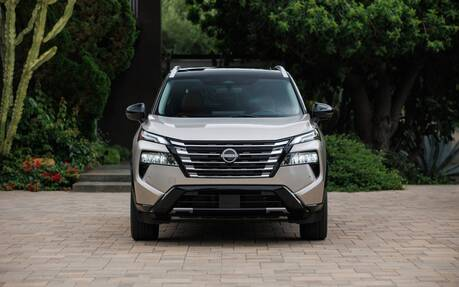
One of the standout features directly stemming from this electric-centric design is Nissan’s “e-Step” one-pedal driving mode. For anyone accustomed to driving full EVs, this feature is a revelation. It allows the driver to largely control acceleration and deceleration using only the accelerator pedal. Lift off, and the regenerative braking system smoothly slows the vehicle, often to a complete stop, while simultaneously recuperating energy back into the battery. This not only simplifies the driving experience, especially in urban stop-and-go traffic, but also contributes significantly to overall “fuel-efficient SUV” operation and range. It’s a direct inheritance from Nissan’s pioneering work on the Leaf and the advanced Ariya, seamlessly integrated into a mainstream crossover.
While the electric motors lead the charge, the 2.4-liter engine is far from a mere bystander. It’s a sophisticated component that can, when conditions demand, directly turn the front drive wheels via a single-speed clutch. More often, however, it functions as a highly efficient generator, producing electrical power to either replenish the 20-kWh battery pack or directly feed the traction motors. This ingenious setup ensures that even when the battery is depleted, the vehicle continues to operate as a potent series hybrid, maintaining robust performance and range without range anxiety – a common concern for potential “plug-in hybrid SUV” owners.
Electrified Range and the Charging Conundrum
The heart of any PHEV lies in its battery and electric-only range. The 2026 Nissan Rogue PHEV is equipped with a substantial 20-kWh battery pack. While Nissan has officially announced a total range of approximately 420 miles, a crucial detail often sought by consumers and experts alike is the pure electric driving capability. The article implies around 38 miles of silent, emission-free driving in full EV mode. This figure positions the Rogue PHEV competitively within the “PHEV benefits” spectrum, offering enough electric range for many daily commutes without ever needing to engage the gasoline engine, thereby significantly reducing operating costs and carbon footprint.
However, the charging landscape for the Rogue PHEV presents a nuanced picture. As we transition into 2025, the automotive industry is undergoing a significant shift towards the North American Charging Standard (NACS). While Nissan’s dedicated battery electric vehicles (BEVs) are beginning to adopt NACS, the 2026 Rogue PHEV will continue to rely on the venerable J1772 charging port. This means it won’t benefit from the growing NACS network or the higher charging speeds often associated with it.
More importantly, the Rogue PHEV will not support DC fast charging. From an expert perspective, this isn’t necessarily a critical flaw for a PHEV of this nature. Given that the internal combustion engine can act as a generator and propel the vehicle even when the battery is low, the immediate need for rapid charging isn’t as pressing as it would be for a pure EV. The primary charging philosophy for a PHEV is typically overnight Level 2 (240-volt AC) charging at home or workplace charging during the day.
For the 2026 Nissan Rogue PHEV, charging on a Level 2, 220-volt AC charger, limited by its 3.5-kW onboard charger, will take approximately 7.5 hours. While not the fastest, this duration is perfectly suitable for overnight charging, ensuring a full electric range each morning. For those without access to Level 2 charging, a standard 120-volt household outlet can be used, though this will extend charging times significantly to around 16 hours due to the lower voltage and a reduced charge rate of 1.7-1.8 kW. This flexibility, while slower, ensures that charging is always an option, enhancing the vehicle’s practicality as a “sustainable automotive solution” for a wider range of homeowners.
Interior Refinement and Unmatched Versatility: The Three-Row Advantage
Beyond its innovative powertrain, the 2026 Nissan Rogue PHEV elevates its game in the highly contested compact SUV segment by offering a suite of standard features designed to enhance comfort, convenience, and versatility. A pivotal upgrade for the PHEV variant is its standard three-row configuration, a rarity in the compact SUV class. This thoughtful addition transforms the Rogue into a genuine seven-seater, addressing the needs of growing families and those who occasionally require extra passenger capacity.
While the third-row bench is best suited for two smaller individuals, a common characteristic of “three-row SUV” offerings in this segment, its presence significantly boosts the Rogue’s appeal. Access to the rearmost seats is facilitated by a flexible second row that not only slides and reclines for optimal comfort but also features a convenient 40/20/40 split-fold, making cargo loading and third-row entry straightforward. This level of adaptability ensures the Rogue PHEV remains a highly “family-friendly SUV” for diverse lifestyles.
Inside, the cabin is a testament to Nissan’s commitment to modern technology and user-friendly interfaces. A 9.0-inch infotainment screen comes standard, featuring wireless Apple CarPlay and wired Android Auto, ensuring seamless smartphone integration. Drivers will appreciate the standard 12.3-inch digital display, a configurable instrument cluster that allows for personalized presentation of crucial vehicle vitals, navigation, and entertainment information. Complementing this is a crisp 10.0-inch head-up display (HUD), projecting essential data like speed and directions directly into the driver’s line of sight, minimizing distraction and enhancing safety – a key consideration when evaluating “advanced safety features” in a modern vehicle.
Stepping up to the Platinum trim further enhances the ownership experience with premium amenities. This includes a pair of 120-volt, 1.5-kW power outlets – one strategically placed for rear-seat occupants and another in the cargo area – in addition to the standard front and rear USB-A and USB-C ports. These outlets are incredibly practical for charging laptops, power tools, or camping equipment, expanding the Rogue’s utility. A nine-speaker Bose sound system completes the premium experience, allowing occupants to fully immerse themselves in high-fidelity audio, especially during those quiet, 38-mile stretches of pure EV driving. The enhanced quietness of the EV mode truly allows the sound system to shine, making every journey more enjoyable.
Safety and Driver Assistance: Intelligent Protection for 2025 and Beyond
In today’s automotive market, an expert would agree that safety and driver assistance technologies are not merely options but essential components of a modern vehicle. The 2026 Nissan Rogue PHEV doesn’t disappoint, incorporating a comprehensive suite of features designed to protect occupants and enhance driving confidence.
Standard across the lineup is Nissan Safety Shield 360, a robust package that includes Automatic Emergency Braking with Pedestrian Detection, Blind Spot Warning, Rear Cross Traffic Alert, Lane Departure Warning, High Beam Assist, and Rear Automatic Braking. These systems work in concert to provide a 360-degree layer of protection, actively monitoring the vehicle’s surroundings and intervening when necessary to mitigate potential collisions.
Beyond passive and active safety, the Rogue PHEV also features ProPilot Assist 1.1. This is Nissan’s advanced Level 2 driver-assist system, offering a sophisticated blend of steering, braking, and acceleration support. While it stops short of hands-free driving – a feature typically found in more advanced Level 2+ systems – ProPilot Assist significantly reduces driver fatigue on long highway stretches and in congested traffic, representing a crucial step towards more autonomous driving. It’s a testament to Nissan’s “driver-assist technology” development, aiming for practicality and widespread adoption.
Further enhancing maneuverability and safety, especially in tight parking situations or at low speeds, is the standard Intelligent Around View Monitor with Moving Object Detection. This system provides a composite, 360-degree bird’s-eye view of the vehicle’s surroundings, making parking and navigating confined spaces significantly easier and safer by alerting the driver to any moving objects in the vehicle’s immediate vicinity. This suite of “advanced safety features” collectively positions the Rogue PHEV as a highly secure and confidence-inspiring vehicle for families and individuals alike.
The 2025 Market Landscape and the Rogue PHEV’s Value Proposition
As we navigate the dynamic automotive market of 2025, the introduction of the 2026 Nissan Rogue PHEV is a meticulously calculated move. Consumers are increasingly discerning, demanding not just efficiency but also versatility, cutting-edge technology, and a commitment to sustainability. With rising fuel costs and growing environmental awareness, the “plug-in hybrid SUV” segment is experiencing significant growth, offering a compelling bridge between traditional gasoline vehicles and pure EVs.
The Rogue PHEV enters this arena with a strong value proposition. Its “best value PHEV” appeal stems from its generous standard features, practical three-row seating, and the promised electric-first driving experience, all while aiming to keep the starting price under $50,000. This competitive pricing, combined with potential “EV tax credits eligibility” that PHEVs can often qualify for, makes the Rogue a financially attractive option for those looking to reduce their “cost of ownership PHEV” over the long term.
From an expert’s perspective, the decision to launch a PHEV with a focus on EV-like driving, rather than a conventional hybrid, is a smart play by Nissan. It taps into the aspirational qualities of electric vehicles – instant torque, quiet operation, and lower running costs – without demanding the full commitment to a BEV’s charging infrastructure. For many, the Rogue PHEV represents the ideal “transition vehicle,” allowing them to experience the benefits of electric mobility while retaining the flexibility and range of a gasoline engine for longer journeys. This hybrid approach caters to a broad demographic, including those who are curious about the “future of automotive” but not yet ready for a full EV.
The shared platform with the Mitsubishi Outlander PHEV also speaks to manufacturing efficiencies and proven reliability, offering peace of mind to potential buyers. In a crowded segment filled with strong competitors from Honda, Toyota, Hyundai, and Kia, the Rogue PHEV’s unique combination of three-row seating, advanced electric powertrain, and comprehensive safety features provides a distinct edge. Its “Nissan electrification strategy” is clearly focused on delivering practical, accessible solutions for the mass market.
Looking Ahead: The Rogue PHEV as a Catalyst for Change
The 2026 Nissan Rogue PHEV is more than just a new model; it’s a significant statement from Nissan about its future direction in the American market. It represents a pivot towards more electrified offerings that prioritize the driver experience and environmental responsibility without sacrificing the practicality and affordability that the Rogue nameplate is known for. With its compelling blend of power, efficiency, versatility, and advanced technology, the Rogue PHEV is poised to become a formidable contender in the rapidly evolving compact SUV segment.
For those of us who track automotive trends, this vehicle signifies Nissan’s readiness to meet the demands of the modern consumer head-on. It addresses the growing desire for “sustainable driving solutions” that fit seamlessly into everyday life, offering a tangible step towards a greener future. The blend of a powerful engine, intelligent electric motors, and smart charging capabilities makes it a highly relevant choice for 2025 and beyond.
Experience the Future of Family Driving Today.
The 2026 Nissan Rogue PHEV is more than an evolution; it’s a revolution in family-friendly, efficient driving. Are you ready to discover how Nissan is redefining the compact SUV with electric-first innovation and unparalleled versatility? Explore the possibilities, calculate your fuel savings, and understand why the future of family adventure starts here. Visit your local Nissan dealer or connect with us online to learn more and prepare for the arrival of this groundbreaking vehicle. Your journey into electrified driving begins now.